Nextcloud vs other Cloud Storage: advantages and disadvantages
How to choose between self-hosted storage and ready-made cloud apps
Cloud storage platforms simplify remote work: teams share files, collaborate on documents, and access data from anywhere. But there are two very different approaches:
Self-hosted cloud (you control server + data + policies)
SaaS storage (a provider hosts everything; you use a subscription)
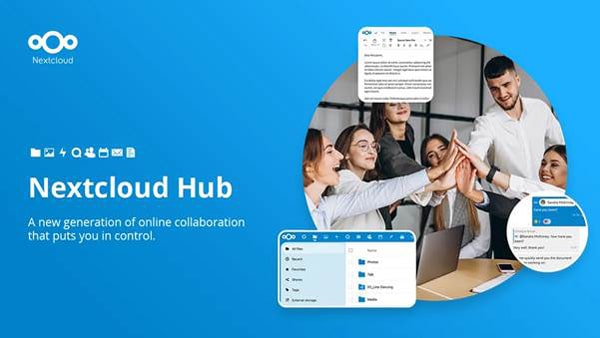
Nextcloud is one of the most popular open-source platforms for building a personal or corporate cloud. It can run on your own infrastructure (including VPS hosting) and can be extended with apps for collaboration, calendars, contacts, calls, and more.
If you want maximum control over privacy, performance, and policies, many teams deploy Nextcloud on Linux VPS using Cube-Host VPS hosting.
What Nextcloud includes
Nextcloud is more than “a folder in the cloud.” With the right configuration and apps, it can provide:
File storage and synchronization (web + desktop + mobile clients)
Sharing and collaboration (internal users, groups, external links with controls)
Calendars and contacts (groupware-style workflows)
Document viewing/editing via supported office integrations
Control over data. Your files live where you decide. This improves privacy and makes it easier to enforce internal policies.
Collaboration without giving up ownership. You can enable sharing, editing, and calls while keeping governance on your side.
Security flexibility. You can enforce 2FA, restrict sharing, isolate users/groups, and apply rules like “confidential files are not shareable externally.”
Extensibility. Open architecture allows adding apps and integrations to fit your workflows.
Scales with your infrastructure. Storage limits are defined by the server resources you allocate (CPU/RAM/storage), not by a fixed plan ceiling.
Disadvantages and responsibilities to consider
Technical expertise is required. Self-hosting means you (or your IT partner) manage updates, backups, performance, and security.
Maintenance is ongoing. Like any server system, it needs patching, monitoring, and periodic tuning.
Scaling must be planned. More users often means better storage I/O, database tuning, caching, and sometimes separating components.
Comparison: self-hosted cloud vs SaaS storage
Below is a practical comparison. (Specific features vary by plan and implementation, but the decision logic stays consistent.)
Criteria
Nextcloud (self-hosted)
SaaS cloud storage
Data ownership
You control where data lives and who accesses it
Data is hosted on provider infrastructure
Customization
High (apps, policies, integrations, branding)
Limited to what the service allows
Compliance & governance
Can be aligned to internal rules (if configured well)
Depends on provider’s options and contracts
Operational effort
You manage updates, backups, monitoring
Provider manages platform maintenance
Cost model
Infrastructure cost + admin time (predictable if sized correctly)
Subscription per user/storage (simple, but can grow fast)
Examples of SaaS storage services include popular “drive-style” platforms and office-suite clouds. They are great for quick starts, but self-hosting is often preferred when privacy, customization, or strict access policies matter more than simplicity.
Who should choose Nextcloud
Teams that need privacy and internal control over files and metadata
Companies that require custom access rules and strict sharing limitations
Organizations that want branding and workflow flexibility
Projects that benefit from integrating storage with other services (calendar, chat, document editing)
Who should choose SaaS storage instead
Small teams without technical support who want “it just works”
Businesses that don’t need custom policies and are fine with provider governance
Use cases where the fastest deployment matters more than infrastructure control
How to size a server for Nextcloud
Server sizing depends on users, sync frequency, file sizes, and enabled apps. Use this as a practical starting point and scale as you grow.
Team size
Recommended start
Notes
1–10 users
2 vCPU / 2–4 GB RAM / SSD storage
Good for files + basic sharing
10–50 users
4 vCPU / 8 GB RAM / fast SSD/NVMe
Database and caching start to matter
50+ users
Scale compute + storage, consider separating DB and adding caching
Monitoring, backups, and performance tuning become critical
A typical deployment uses Linux VPS plus a web server, PHP runtime, and a database. For predictable resources and full control, start with Cube-Host VPS hosting.
Common mistakes when deploying Nextcloud (and fixes)
No backup restore testing Fix: schedule backups and regularly test restores of both files and database.
Slow performance after onboarding users Fix: upgrade RAM/storage I/O, enable caching, tune database, review heavy apps.
Over-sharing sensitive content Fix: enforce role-based access control and limit public links (password + expiration).
Delaying updates Fix: plan maintenance windows and keep core/apps patched for security.
Conclusion: pick the model that matches your control needs
Nextcloud is a strong choice when you want a personal or corporate cloud under your control, with flexible collaboration and security. SaaS storage is simpler to start with, but offers less control. The best option depends on your team’s governance requirements, technical capacity, and long-term cost model.
To provide the best experiences, we use technologies like cookies to store and/or access device information. Consenting to these technologies will allow us to process data such as browsing behavior or unique IDs on this site. Not consenting or withdrawing consent, may adversely affect certain features and functions.
Functional
Always active
The technical storage or access is strictly necessary for the legitimate purpose of enabling the use of a specific service explicitly requested by the subscriber or user, or for the sole purpose of carrying out the transmission of a communication over an electronic communications network.
Preferences
The technical storage or access is necessary for the legitimate purpose of storing preferences that are not requested by the subscriber or user.
Statistics
The technical storage or access that is used exclusively for statistical purposes.The technical storage or access that is used exclusively for anonymous statistical purposes. Without a subpoena, voluntary compliance on the part of your Internet Service Provider, or additional records from a third party, information stored or retrieved for this purpose alone cannot usually be used to identify you.
Marketing
The technical storage or access is required to create user profiles to send advertising, or to track the user on a website or across several websites for similar marketing purposes.